Skip to content
7.2 Asthma
7.2 Asthma
Asthma Overview
Signs & Symptoms
Treatment
Asthma Video
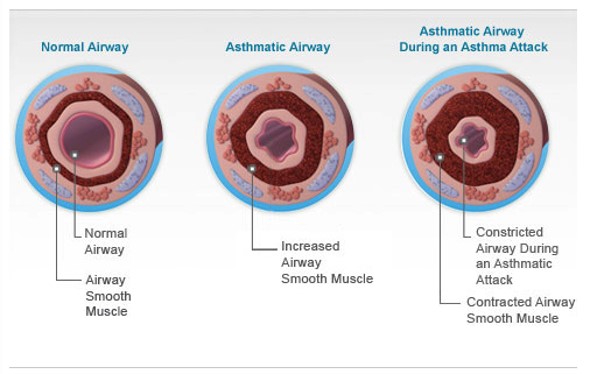
Asthma is a disease of the small airways (Bronchioles) which presents intermittently and with varying severity
There are 3 main components of asthma
Bronchospasm
– Smooth muscle in the wall of the airways spasms and causes the internal diameter to reduce
Mucosa Swelling
– The inner most layer of the small airways become swollen and irritated
Mucosa Plugging
– The irritated mucous membrane produces extra mucous which further reduces the internal diameter of the airway
Signs and Symptoms
Mild to Moderate Asthma Attack
A dry, irritating, persistent cough, particularly at night, early morning, with exercise or activity
Chest tightness
Shortness of breath
Wheeze (high pitched whistling sound during breathing).
Severe Asthma
Gasping for breath (may have little or no wheeze due to little movement of air)
Severe chest tightness
Inability to speak more than one or two words per breath
Feeling distressed and anxious
Little or no improvement after using “reliever” medication
Sucking in’ of the throat and rib muscles, use of shoulder muscles or bracing with arms to help breathing
Blue discolouration around the lips (can be hard to see if skin colour also changes)
Pale and sweaty skin
Symptoms rapidly getting worse or using reliever more than every two hours
Patients that suffer from asthma may have 2 different types of medication
Preventer Medication (regular dose)
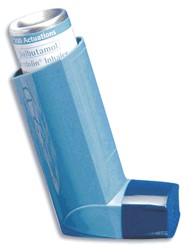
Reliever Medication (as needed dose)
Treatment
Rest and Reassure
Provide a fresh air environment
Position sitting up or leaning forward
Arrange for patient to commence self management with Modified dose Inhaler (grey puffer)
Assist with reliever medication
1 puff 4 breaths repeat 4 times
Reassess after 4 minutes,
if no improvement repeat dose and call ambulance
Login
Accessing this course requires a login. Please enter your credentials below!
Username or Email Address
Password
Remember Me
Lost Your Password?