7.10 Burns
A burn injury results from a combination of a thermal or other tissue damaging source, the temperature and the time of exposure to the body. The sources of burns include:
Heat Explosions, flame, steam or liquids.
Chemicals – Alkalis and acids.
Electricity – Faulty or damaged cable.
– Sunburn or radioactive sources.
– Rope or skidding on a surface causing heat. – Contact with dry ice and extreme cold.
Causes of Burns
Heat: Explosions, flame, steam, liquids
Chemicals: Acids and Alkalis
Electricity: Damaged tissue due to flow of
electricity through skin and organs
Radiation: Sun burn
Friction: Rope burns (also abrasions may
be considered a type of friction burn)
Cold: Dry ice, frostbite
Severity of burns are determined by
Temperature
Exposure to source
Area and depth
Classification of burns
Partial thickness / Superficial
Burns to only the outer layer of tissue
Full thickness
Burns that progress through the full layers of skin and may include underlying tissue or organs
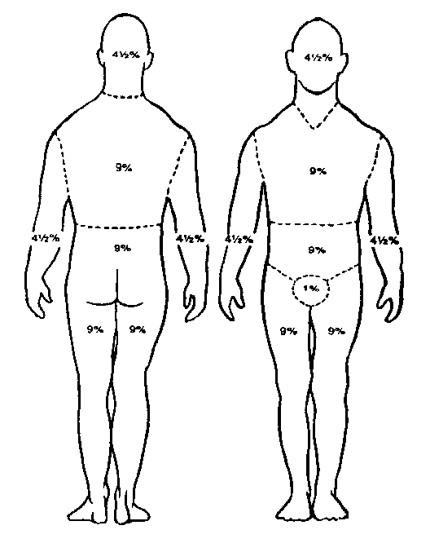
Rule of Nines
Head – 9%
Chest / upper back – 9% each
Abdomen / lower back – 9% each
Genital area – 1%
Front of the leg /Back of the leg – 9% each
Arm – 9% each
Significant burns defined as:
Burns >10% total body surface area (TBSA)
Full thickness burns >5% TBSA
Burns of special areas
Face, Hands, Feet
Genitalia, perineum
Major joints
Electrical Burns
Chemical Burns
Burns with associated inhalation injury
Circumferential burns
Burns in the very old or very young
People with complicating conditions
Burns with trauma
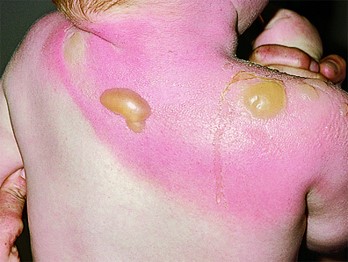
Superficial & Partial Thickness
Redness
Blanching
Blistered
Painful
Exudes Plasma
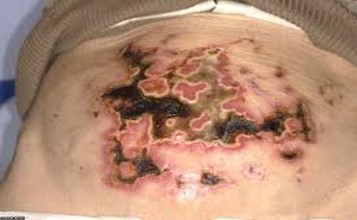
Full Thickness
Pain only around edge
Often Dry & Leathery
Blanches white on pressure
May be brown, black or marble-like
Thermal Burns:
Do not remove clothing that is stuck to the
Remove jewellery if possible. Burns cause swelling, if a ring is left on the casualty it can act as a tourniquet and restrict blood
Sunburn:
Cool the sunburn with cool, running
Stay out of the
Give cool
Medical aid for infants and casualties with blisters
Chemical Burns
Do not self contaminate
Use copious quantities of water to dilute the chemical and to wash it from casualty’s skin
Remove contaminated clothing
Do not apply neutralizing agent
If swallowed, milk and call the “poison line” 13 11 26
Electrical Burns:
Follow DRSABCD Action Plan – Complete a risk/hazard assessment.
Check for danger and ensure the power is turned off wherever possible.
Remove casualty from electrical supply. Do not directly touch the casualty, use dry non-conductive materials such as a broom handle.
Urgent medical aid.
All burns
Keep the casualty comfortable
Do not apply creams, oils ointments, remove clothes stuck to skin, let them get cold
Call for an ambulance Reassure the casualty