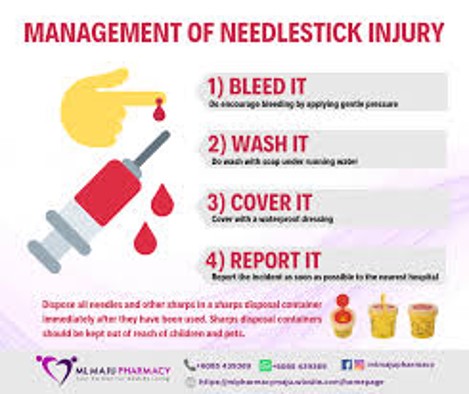
4.1 Needle stick injuries, exposure to blood & body fluids

Needle stick injuries are injuries to the body caused by a sharp object such as a needle.
Exposure to blood and bodily fluids is direct contact of the casualty’s blood/bodily fluids to the First Aiders open wound, eyes, mouth, and genitals.
The chances of catching HIV from an infected person are very low, but the chance of catching Hep B is 1 in 3.

A needlestick injury occurs when the skin is accidentally punctured by a used needle. Here are the signs and symptoms to watch for:
  1. Pain: Victims usually feel a small, sharp pain at the needlestick point.
  2. Blood: A small drop of blood may appear at the injury site.
  3. Redness or Swelling: The injury can cause redness or swelling where the needle penetrated12.
  4. Visible Contamination: If the needle has visible signs of blood, it’s important to seek medical attention promptly
  1. First Aid Response
    • Wash the affected area gently with soap and running tap water as soon as possible.
    • Apply an antiseptic and cover the injury with a clean dressing.
    • Dispose of the needle safely.
  2. Assess the Risk:
    • Determine whether the needlestick injury is high risk.
    • Consider the immunization history of the person who sustained the injury (specifically tetanus and hepatitis B).
  3. Medical Attention:
    • If needed seek prompt medical advice from a local doctor or hospital emergency department,
  4. Testing 
    • If required test for bloodborne pathogens if necessary:
      • Hepatitis B surface antibody (HBsAb) if immunized.
      • Hepatitis B surface antigen, hepatitis C serology, and HIV serology if the source is known to be infected.