Skip to content
5.6 Compressions/Rescue breathing
5.6 Compressions/Rescue breathing
CPR Overview
CPR Adults
CPR Children & Infants
Rescue Breathing
CPR is an attempt to manually replace cardiac output in a patient whose heart is not pumping blood
Chest Compressions
Hands are placed on the breast bone at the centre of the chest
The breast bone is compressed 1/3rd of the depth of the chest
30 compressions are performed at a rate of 100 to 120 per minute (this works out to 5 cycles in 2 minutes)
If chest compressions are performed on a woman in late pregnancy a pad should be placed under the right hip to allow blood to flow back to the heart
unimpeded by the foetus
Children and Infants
Lower half of sternum
Use one arm or two fingers
Compress 1/3rd the depth of the chest
Compress 100 times per minute
Adjust compression depth to the size of patient
Children and Small adults
If needed a single hand approach to compressions can be used
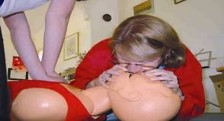
Rescue breaths provide a small supplement of extra oxygen containing air to the patient
Use a barrier mask or one way valve mask to protect from infection transfer if available
Using head tilt chin lift technique gently tilt the head backward
Pinch the nostrils closed to assist with sealing airway
If dentures are present and they remain seated correctly and are not broken leave them in place to assist with securing a seal
Place your mouth completely over the mouth of the patient
Deliver 2 normal size breaths into the mouth of the victim
Deliver rescue breaths quickly to reduce the break between chest compressions
Rescue Breaths Infants
Use small breaths (do not over inflate lungs)
Login
Accessing this course requires a login. Please enter your credentials below!
Username or Email Address
Password
Remember Me
Lost Your Password?